Rethinking Pinotage
Obviously as a handsome and wise reader of our articles, you don’t need us to tell you that tomorrow is International Pinotage Day.
But on the very remote chance that your calendar wasn’t marked, consider this your notice that we’re celebrating the world’s most marmite grape.
And, in usual Fells fashion, querying whether that very notion – of Pinotage as a ‘love it or hate it’ style – isn’t more than a little dated.
Young grape, old stigma
‘People have just got to try it again,’ says Danie Steytler. ‘They might have had a bad experience, so it’s easy to say ‘no, it’s a terrible grape, I don’t want to try it’, but I think give it a chance.’
Now, given Danie heads up Kaapzicht, our new South African winery partner, and a leading specialist in Pinotage, you’d expect him to be biased. And you’d expect us to be biased too. And you’d be right. So – a little context.
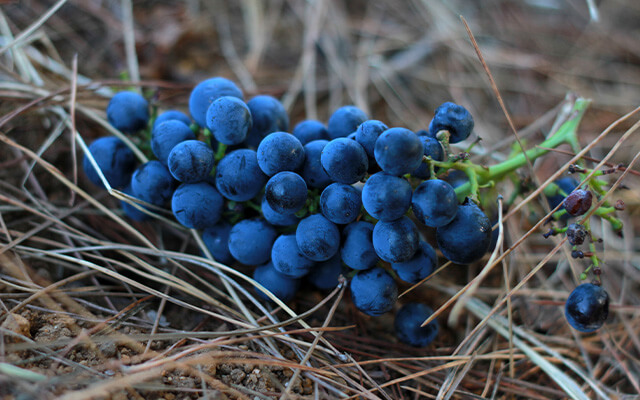
Pinotage is a young grape. First created in 1925, a cross between Pinot Noir and Cinsault (referred to as ‘Hermitage’ in South Africa at the time). First commercial plantings didn’t take place until 1953 and first commercial wines weren’t bottled until 1959.
‘If you look at it now in 2026, we’ve made Pinotage as an industry 67 times,’ Danie says. ‘So that’s really not a lot, and like anything – you go out and play a rugby game and you’ve never played rugby before, you’re not going to be very good. The first few decades – 60s, 70s, 80s, I think we misunderstood the grape.’
Part of the issue, perhaps, is the question of which of its parents Pinotage wants to be – and, perhaps more pertinently, which style winemakers are trying to capture.
The truth is that whilst it brings aspects of both, it is not enormously like either – very much its own thing. But early attempts in the vineyard and winery to push it hard in one direction or the other resulted in the wine not showing its best.
More concerningly, early examples produced a somewhat acetone characteristic in the wine. ‘In the ‘80s there were some British writers who I think said it tasted like paint remover or rusty nails,’ admits Danie.
And as makers in other regions and countries have found – look at Germany and Austria, for example – once a stigma has set in, however fair or otherwise, it can be difficult to remove.
Long past time for reappraisal
The upshot, if we’re honest with ourselves, is a wine culture, perhaps particularly in the UK, with a somewhat handed-down view of Pinotage.
How many people have you met in the industry who say, almost by default, that they don’t like the grape? But how many great examples do you think they’ve tried recently?
If there’s any winery which could change their opinion, it’s Kaapzicht.
‘My grandfather planted our first block in 1959 so I feel like we were one of the pioneers of it, pushing the varietal from an early age,’ Danie says.
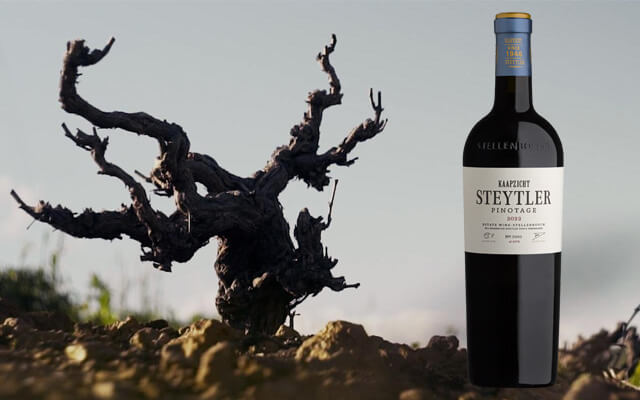
‘Our flagship, the Steytler, is from a vineyard planted in 1970, so 56-year-old Pinotage vines. Produces less fruit, smaller berries, more concentration, more power – but elegant at the same time.’
Kaapzicht’s approach is to allow Pinotage to grow in the way that suits the variety, and to express itself in the way most natural to each vineyard.
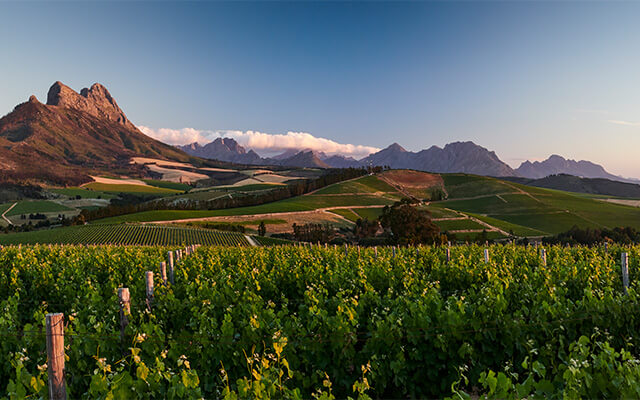
Location is key. As Danie says: ‘I don’t think it grows [well] everywhere, I think it’s got its favourite spots. If you look at the six most-awarded Pinotage makers in South Africa, five of them grow within an eight kilometer radius. So that’s got to say something about the area.’
(You likely won’t be shocked to learn that Kaapzicht is one of those five).
A tasting of Danie’s Pinotages at the office was more than sufficient to remove any lingering question marks anyone in the team might have had about this once-divisive grape.
The single vineyards were astonishing in the different ways they inflected the variety; the elegance and aromatics of the Skraalhans sitting beside the weight and depth of the Rooiland.
Then there was the sheer vibrancy of fruit in their Family Pinotage, and the extraordinary complexity and concentration of his flagship Steytler.
Needless to say, we adored them all. But it was impossible to imagine that there wasn’t a Pinotage in that quartet to suit every wine drinker’s taste.
Discover it for yourself
As Danie himself admits, Pinotage has been on a journey, and unquestionably there have been some bumps in the road.
But it’s 2026 now. There’s no question whatsoever that South Africa is home to some of the world’s greatest wines. The idea that it wouldn’t be producing world-class examples of its own signature grape simply doesn’t bear scrutiny.
More importantly, it doesn’t stand up to the modern body of liquid evidence.
At the end of the day, there are dreadful examples made of every grape variety produced worldwide.
But in the hands of makers like Kaapzicht – family producers obsessed with growing their grapes as sensitively as possible, making wines of consideration and care – Pinotage is not just ‘better than it was’ … it can be extraordinary.
We’d say that’s worth raising a glass to. Happy Pinotage Day to all who celebrate. These days, that should be all of you.
Stories, insight and of course wine
Stay up to date with the world of wine