2026 Harvest: Sicily between heat and resilience
For Cantine Pellegrino, the 2026 harvest has been “warm and challenging.” Harvesting began earlier than usual in western Sicily, with lower yields but promising quality prospects. In Pantelleria, Zibibbo grapes show even ripening and an elegant aromatic profile.
“Warm and challenging” are the words used to describe the 2026 harvest by Pietro Russo MW, Pellegrino’s wine consultant, and Giovanni Manzo, the winemaker responsible for the production of white and red wines.
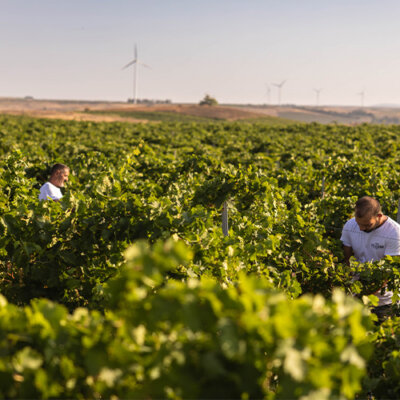
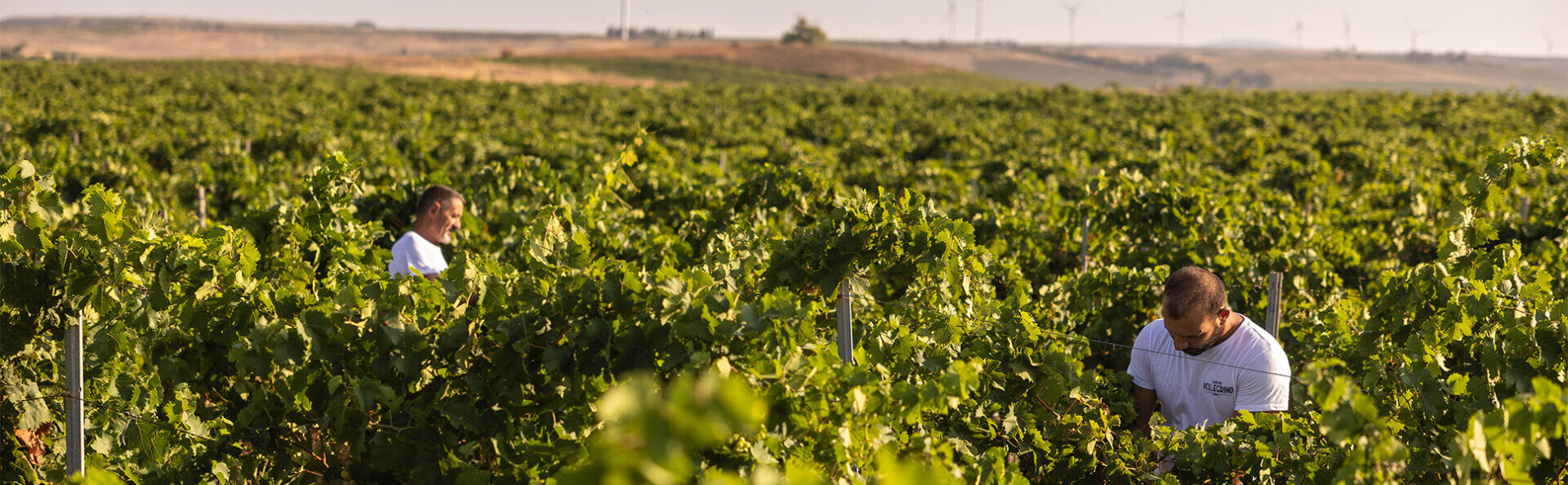
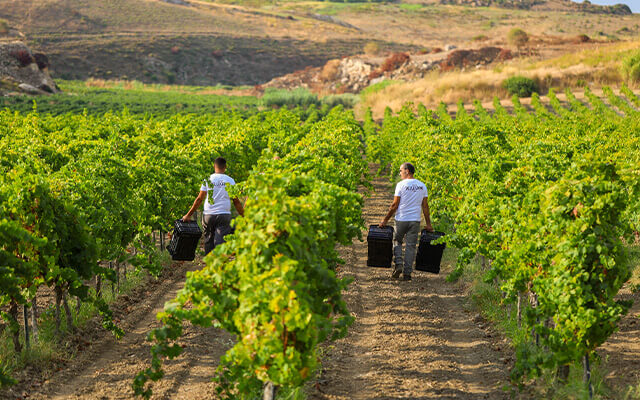
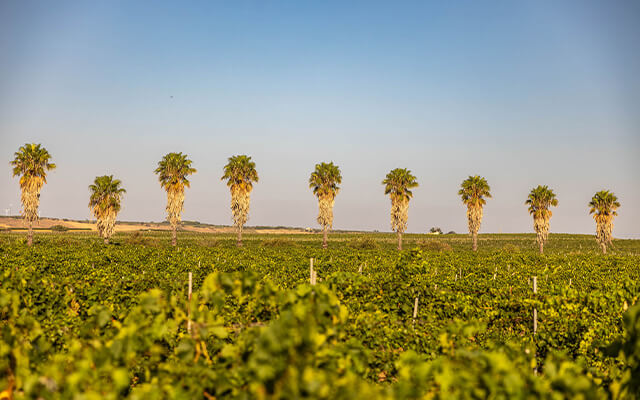
In western Sicily, persistent heatwaves and high nighttime temperatures accelerated grape ripening, requiring careful management of harvest timing and precise vineyard selection. Harvesting began on August 3 in inland areas, around ten days earlier than usual, while coastal areas followed a more regular pattern thanks to the moderating influence of the sea.
Rainfall concentrated in winter and spring, followed by a prolonged dry spell
Rainfall data compiled by Pellegrino based on the SIAS monitoring network show that the first half of 2026 was particularly wet in the province of Trapani, with an average of 371 mm between January and June — 20% more than in 2025 and 55% more than in 2024. After April, however, rainfall virtually ceased, with average precipitation of just 4.4 mm in May and 4.6 mm in June. The water reserves accumulated in the preceding months therefore helped the vines withstand the summer heat.
Yields also varied significantly across the region: inland areas around Marsala and Mazara recorded declines of around 30%, while coastal areas maintained relatively stable production volumes.
Promising quality prospects for both white and red wines
Initial assessments point to wines with slightly higher alcohol levels, while retaining a good balance between acidity and aromatic expression. Red grape varieties have shown good concentrations of polyphenols and anthocyanins, resulting in structured, aromatic wines. Among the white varieties, Grillo has confirmed its ability to adapt well to the climatic conditions of the vintage.
In Pantelleria, the harvest followed a more typical pattern overall. Picking of Zibibbo grapes destined for drying began in the first week of August, while harvesting for white wines started on August 25. Ripening was even, with an elegant aromatic profile and a good balance between sugar levels and acidity. Production on the island is estimated to be down by 10–15%, mainly due to climatic conditions during fruit set.
The 2026 harvest also raises broader questions about the future of Sicilian viticulture.
According to the technical team, water management will be one of the key challenges in the years ahead. Water availability and the ability to protect vines from heat stress will become increasingly crucial to maintaining high quality standards. At the same time, canopy management, protection against sunburn and vineyard orientation will play an increasingly important role.
In this context, Sicily can also draw on its long-standing experience in managing harvests in hot climatic conditions and the adaptability of its native grape varieties. According to Pellegrino, this wealth of knowledge represents a form of resilience shared by both the vines and the people who cultivate them.
A new addition to the technical team
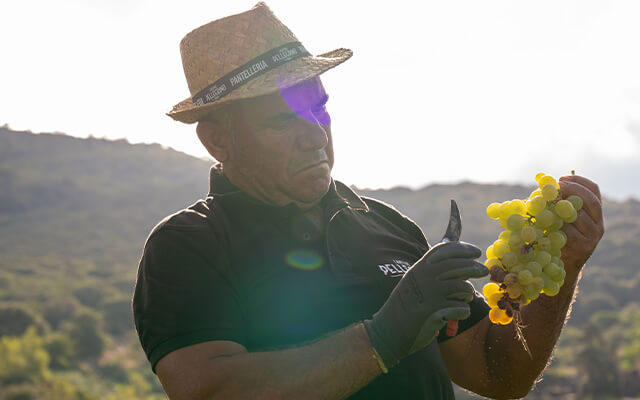
The 2026 harvest also marks the arrival of Giovanni Manzo in Pellegrino’s technical team, where he takes responsibility for the production of white and red wines, succeeding the previous winemaker, who has retired. With extensive experience in the wine industry, including many years at Firriato, Manzo brings to the company an in-depth knowledge of western Sicily, its terroirs and its main native grape varieties.
Alongside him, Pietro Russo MW, Pellegrino’s wine consultant, continues to help shape the winery’s winemaking vision through vintage assessments and winemaking decisions.
Stories, insight and of course wine
Stay up to date with the world of wine