Pantelleria
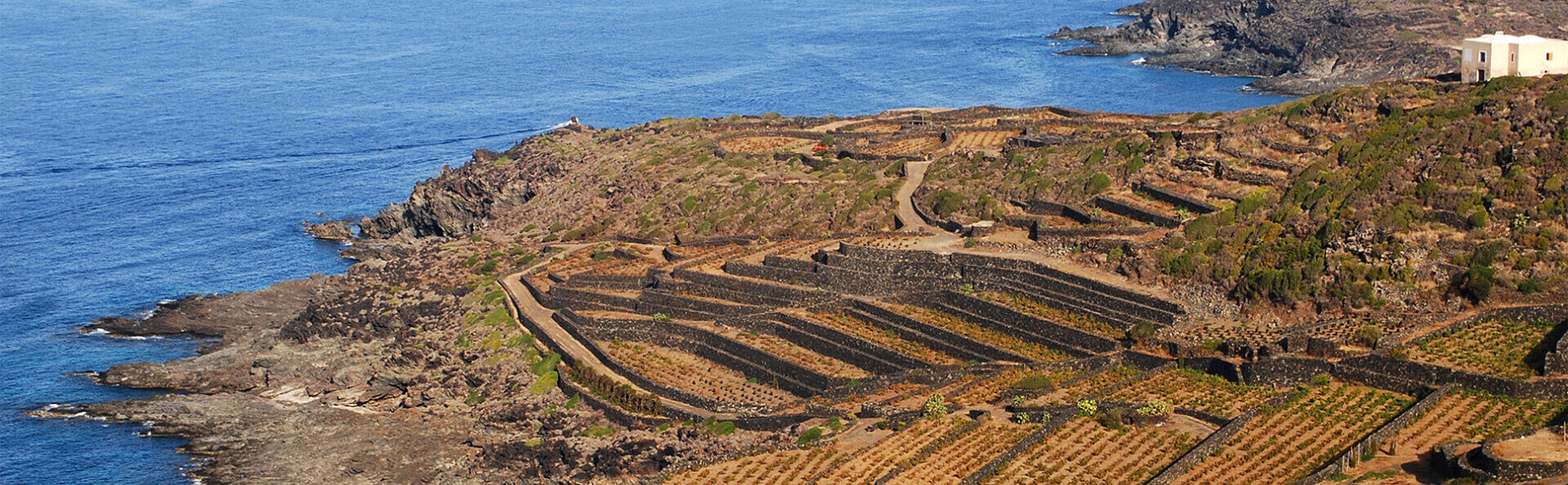
Pantelleria has to be one of the most idiosyncratic and remarkable places growing vines anywhere in the world. So much so, in fact, that its unique method of training them is the only agricultural system in the world to be granted UNESCO World Heritage Status.
It all stems from Pantelleria’s remarkable landscape and climate. A tiny volcanic island in the Mediterranean – considered part of Sicily but geographically closer to Tunisia (though still 60km from its shore), it is absolutely shaped by the impact of the sea, and particularly the mistral and sirocco winds that recur across it – the former extremely cold, the latter extremely hot. There’s never a moment on Pantelleria when the winds truly stop – which is how it gets its name, deriving from the Arabic ‘daughter of the winds.’
To work in these conditions, the ancient practice of ‘vite ad albarello’ vine training is deployed. The vines are planted in small individual hollows called ‘conca’, and pruned to grow six branches spreading radially in bush form, to protect the grapes from both wind and excess sunlight. For further protection, the tiny vineyards are encircled by walls of lava rock stones.
Pantelleria’s most important grape by far is Zibbibo – the local name for Muscat of Alexandria – brought here by the Phoenicians centuries ago. Originally planted for raisins, it was soon recognised that that very quality of raisining produced a sweet wine of astonishing purity and concentration – with the result that it is now all used for wine. This is predominantly the sweet Passito – arguably Italy’s finest sweet wine of all. But increasingly producers are making outstanding dry white wine. Utterly different to Muscat of Alexandria grown anywhere else, here the impact of wind, sea and sunlight make a racy, lemon-scented, saline, thrilling coastal white – a perfect choice for lovers of Assyrtiko or even the white wines of Galicia.
Stories, insight and of course wine
Stay up to date with the world of wine