50 years of Mas La Plana
An especially fun tasting earlier this week.
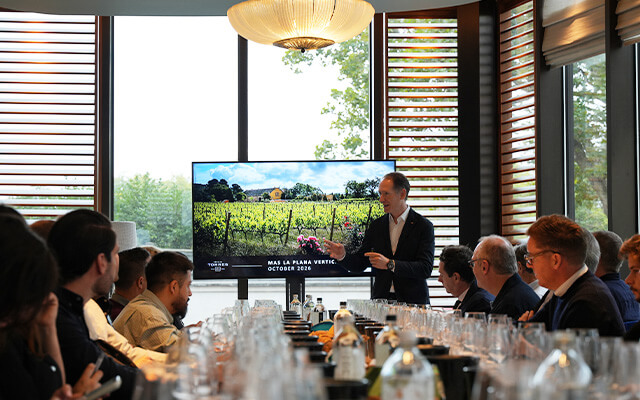
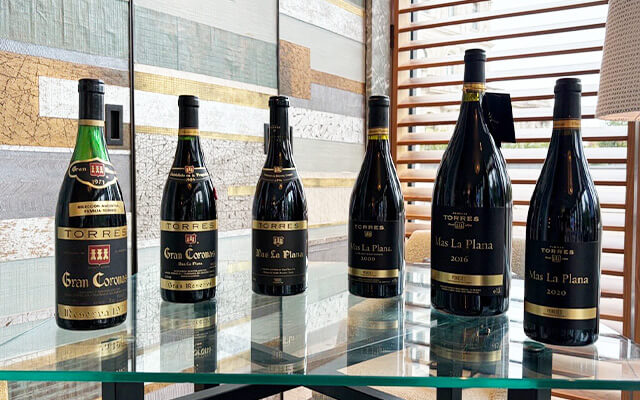
We trooped over to London’s Pavyllon, joined by Miguel Torres himself, for six vintages of the family’s flagship wine, Mas La Plana, going back to 1971.
It’s a genuine Spanish icon. A game changer that beat the French in their own back yard before becoming famous the world over.
Not bad for a wine that even Miguel’s grandfather didn’t think was worth making.
Sacrilege and validation
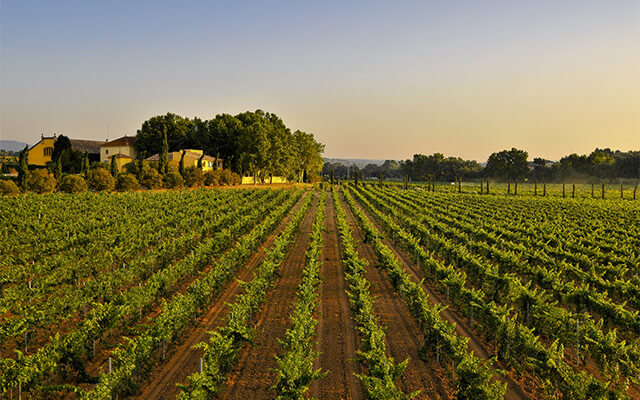
It was 1964 and 1965 when Miguel’s father, Miguel A. Torres (there are a lot of Miguels in this story) first planted Cabernet Sauvignon vines in the Mas La Plana vineyard.
People were skeptical. Not least his own father, Miguel Torres Carbó. Cabernet Sauvignon? Not a Spanish variety. What’s the point?
But Miguel A persisted, with cuttings from his friend Jean León.
When it came to actually making the wine, there was resistance again. Miguel A wanted to call it ‘Mas La Plana,’ after the vineyard. His father didn’t want the vineyard’s name on a Cabernet.
So for the first years of its life it was ‘Gran Coronas Etiqueta Negra’, (Gran Coronas Black Label) with ‘Mas La Plana’ in very small font further down. (The font got bigger in subsequent vintages, when the wine took off!)
Miguel A was convinced of his new creation’s quality. But his father still wasn’t persuaded. So in 1979 Miguel A entered it into what was the world’s most prestigious competition at the time – the Gault & Millau Wine Olympics in Paris.
A good decision. The inaugural 1970 vintage walked away with first place, beating the likes of Châteaux La Mission Haut-Brion, Pichon-Lalande and even Latour.
A terroir-driven wine, evolved over half a century
Mas La Plana (as it finally became officially labelled from 1995) has always been a study in terroir.
A single 28-hectare vineyard at 225 metres altitude, divided into 11 plots and two distinct characters – one producing bolder, riper Cabernet destined for oak, the other a fresher, more vibrant style usually vinified in steel.
Originally the wine was presented as a Cabernet-dominant blend, but from 1978 it has been a single variety Cabernet Sauvignon – arguably the finest in its country.
What was fascinating, tasting six vintages from 1971 with Miguel, is how the wine has subtly evolved in that time.
Not merely in that obvious sense of beginning life as a blend, and moving to a single variety, but in the winery’s very approaches to production and agriculture.
Reading the specs for the 1971, it was vinified in American oak. By 1989 it had moved to a mixture of American and French, and from the ‘90s they had switched to French entirely.
The changing fashion for new oak vs old was also on show across the flight, with 1996 and 2000 entirely aged in new, whilst by 2016 it had moved back to a mixed profile of new and used French.
The vineyard itself has changed in the way it is managed. Torres has always been a pioneer of regenerative agriculture, and Miguel shared the ways that planting the rows between the vines, bringing in sheep to ‘mow the lawn’ and other agricultural methods aided not only in carbon capture but in improving the quality of their grapes themselves.
He didn’t ever recall seeing animals there when he was growing up, he said, but today there are over 200 bird species besides rabbits, deer, and more besides. ‘It’s like visiting a zoo!’
Yet many of the original vines from the 1960s are still there. Miguel explained that replacements only happen a few at a time, to preserve as much of the age and character of the vineyard as possible.
All of this inflects in the wines themselves; a gradual evolution over time, but one that stays true to the vineyard’s inherent DNA of freshness and elegance.
Most remarkable was the longevity; the 1971 still full of fruit and finesse, and each of its younger (though still venerable) stablemates rippling with character.
A perfect irony
You can see Miguel A’s father’s point. In many ways it seems paradoxical that Torres would have planted Cabernet in Mas La Plana.
This is a family, after all, more dedicated than any to finding, restoring and celebrating their treasured ancestral varieties.
But it is also a family which has spent the last 156 years innovating; pushing boundaries in search of quality.
Miguel Torres Carbó himself – so skeptical about Mas La Plana – was one of Spain’s greatest wine pioneers, who restored the family winery when it was bombed in the Civil War, planted new vineyards in Penedès and revolutionised winemaking methods.
They’re a family whose legacy is interwoven with exploring new avenues. Whether that’s investigating other regions around Spain, reviving lost varieties, leading the regenerative movement, or planting their vineyard with France’s signature grape and watching it beat the world.
A true icon in an industry that can often use that word lightly. Cheers to Mas La Plana, and to its next 50 vintages.
Stories, insight and of course wine
Stay up to date with the world of wine