The brilliance of blends
Bit of a meandering thoughtpiece today, so stick the kettle on or – better still (since the sun’s past the yardarm) – pour yourself a glass of something Friday-worthy, and settle in.
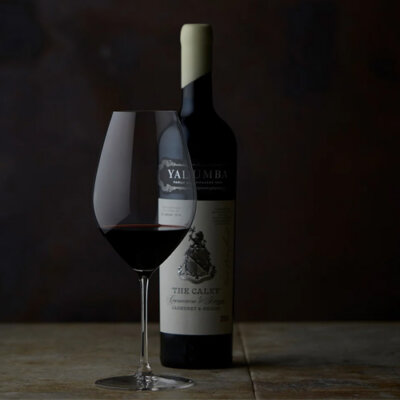
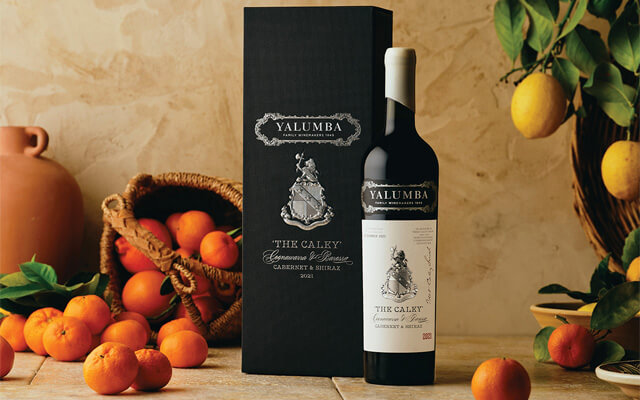
There are still two months to go of course, but it’s hard to imagine we’ll encounter a wine this year that’s praised more effusively than Yalumba’s ‘The Caley’ 2021.
Try this for size:
‘This is not only the greatest wine to ever emerge from the hallowed halls of Yalumba, it is categorically the finest exemplar of the great Australian blend of the modern era, and the equal of the greatest in history. I have bestowed a perfect score on an Australian table wine only once in the past decade, and The Caley 2021 is every bit deserving’. 100 Points, Tyson Steltzer.
Or this:
‘Yalumba The Caley, at its best, is a magnificent wine. Of course it’s pretty much always, every release, at its best. The integration of fruit and oak is a masterclass, as is the deep creek of tannin. In the style of a great Australian red, this wine is as good as anything.’ Campbell Mattinson, The Wine Front.
Or this, from the late, great Matthew Jukes, who knew just about all there was to know on the Australian wine front:
‘When a wine, and there are few on the planet with this epic consistency of production, is released, the world must pay attention. There is so much class here, it is extraordinary.’ 20+/20
Wine’s singularity complex
The glittering encomiums for The Caley stand, in context, almost as a rebuttal to the wine industry – or really the fine wine industry – obsession with the singular.
Not only is it a blend of varieties (Cabernet Sauvignon and Shiraz) and vineyards, it is a marriage of two distinct regions: Coonawarra and Barossa.
The primacy of the singular is everywhere you look in discourse around the higher end of wine. And, in many ways, quite rightly too.
There is something incredibly special about tasting a wine whose grapes only grow in one unbelievably specific spot – perhaps merely a fraction of a single block in a single vineyard – and unpicking the ways in which it differs from the block one along, or the next vineyard down.
This has been raised to its apogee, of course, in Burgundy, where it sometimes seems we’re at the point of demarcating the branches on individual vines! But it’s fascinating, it’s enjoyably nerdy – you could even describe it as ‘fun’. (Which wine ought to be, as we mustn’t forget). And, of course, there’s the rarity factor that singularity can offer. The internal belly-rub of trying something of which very little exists in the world.
Singularity manifests in various ways and at various levels of granularity. This grape variety, that vineyard. It’s also, we must remember, a boon to the consumer in many ways. Wine was democratised (in the UK) to a great extent when variety names started appearing on labels. ‘Oh, I liked that Malbec, I’ll try this one,’ etc. It’s an easy way of building a roadmap of flavour.
But the net result can be a slight suspicion – dare we say a frisson of snobbishness – towards blends.
Less so, perhaps, in some of the classic regions. Bordeaux, Champagne or the Southern Rhône for instance, where ‘singularity’ is so convincingly embedded in the form of the Château or appellation in the mind of the consumer – and varieties aren’t listed on the labels anyway.
But move beyond these establishment (in the UK market) names, and wines that showcase varietal blends can become a trickier sell. Never mind wines with the impertinence to marry entirely different regions.
A historic tradition
And yet, peer under the rock of history, and we find regional blending commonplace not only around the world, but among some of France’s most reputed properties.
In Bordeaux, the practice of strengthening and ripening a wine with Rhône Syrah was once de rigeur at all tiers of quality … and might well still be today, had the AOC system not brought it to an end.
(So much so that Australia’s historic Cabernet-Shiraz blend of which The Caley is comprised was originally referred to as ‘Claret’.)
Importantly, there is no organoleptic reason that a wine made from a single grape variety, vineyard or region should be inherently better than a wine blended from across those three. Indeed, you could argue that if the intention is to create a wine with the greatest possible complexity, the winemaker with the broadest palette to paint from will always have the advantage.
You could even go further, and suggest that where a maker has selected particular disparate grapes and sites and intentionally brought them together in the creation of a specific expression – as is the case with The Caley and its stablemate The Signature – it evinces greater singularity still: a wine that literally could not exist without this specific maker’s mindset.
(Although this flies somewhat heretically in the face of the often-insinuated view that grapes and vineyards somehow turn themselves into wine and that everything that happens after harvest is some kind of irrelevant and possibly suspicious fiddling about).
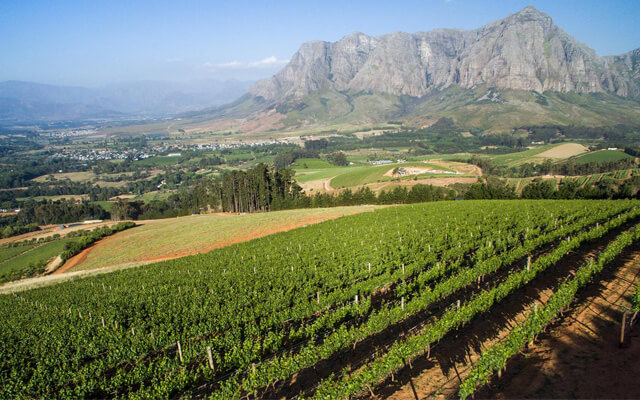
The Caley and the Signature are far from unique in refusing to submit to the tyranny of the singular. As Capensis winemaker Graham Weerts in South Africa described his experience creating their initial Chardonnay: ‘I looked at this array of different vineyards from the 2013 vintage and thought ‘ok, not one singular one is speaking to me in that way’. But you say ‘well what if I put them together in a different way? Suddenly that Stellenbosch component, with a bit of Robinson which gives us that richness. Suddenly it becomes a complete wine.’
Graham did eventually discover a vineyard – indeed a tiny block, the exceptional Fijnbosch – which he loved enough to release singly. But the mindset of not restricting himself by vineyard or region lives on in his exceptional Capensis Chardonnay today.
A world of flavour for the curious
Of course it’s as correct to point out that some blended wines have been made for pragmatic, consistency-related reasons and are not especially interesting as it is to suggest that some single vineyards and varieties can be a little short on depth and breadth.
As in all aspects of wine, there’s no ‘one-size-fits-all’ rule when it comes to quality, beyond the obvious dictum of growing great grapes and treating them with care – a rule as true for the blend as it is for the singular.
But in a wine world where it can seem that the singular is put on a particular pedestal, it’s worth remembering the tradition, pedigree and possibility of a great, considered blend.
Stories, insight and of course wine
Stay up to date with the world of wine