2026 Harvest: Maison Joseph Burrier
Weather Conditions and Growing season
After a mild winter and early budbreak beginning in mid-March, spring was beautiful — especially April — with regular rainfall, and no frost. Flowering, which took place in warm, sunny weather around May 23, went well overall. It is worth noting that no disease pressure emerged this year.
The growing season had therefore gotten off to a very good start, with beautiful vines and a promising harvest. But the summer was marked by a series of three particularly intense and prolonged heat waves: from June 17 to 30 ; from July 4 to 19 ; and then from July 28 to August 19. The 2026 summer is officially the hottest summer ever recorded in France. This heat could have been offset by rain; unfortunately, a dry period set in starting in June, with long stretches without significant precipitation (an average of 123.5 mm of rain from June through August, representing a drop of nearly 50% compared to 2025).
As a result, the vines began to suffer from a lack of water and excessive heat as early as the end of June. This water stress led to a difficult “veraison” and stunted berry growth.
Finally, we were hit by severe hailstorms on Thursday, July 16. The damage was quite significant in the northern Mâconnais region on our plots in Mâcon-Milly-Lamartine and Mâcon-Bussières (approximately a 70% crop loss), as well as in the Beaujolais region, particularly on our plots in Chiroubles (70% loss) and Fleurie (nearly 50% loss). Our vineyards in Moulin à Vent were also affected, though less severely (between 20% and 30%).
Harvest and first impressions in the cellar
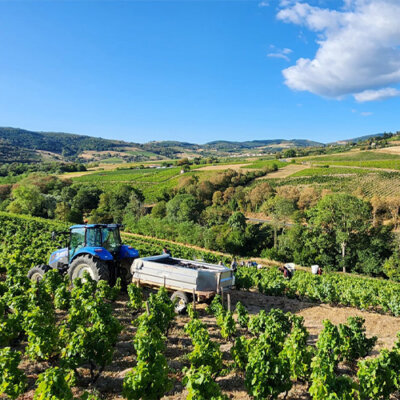
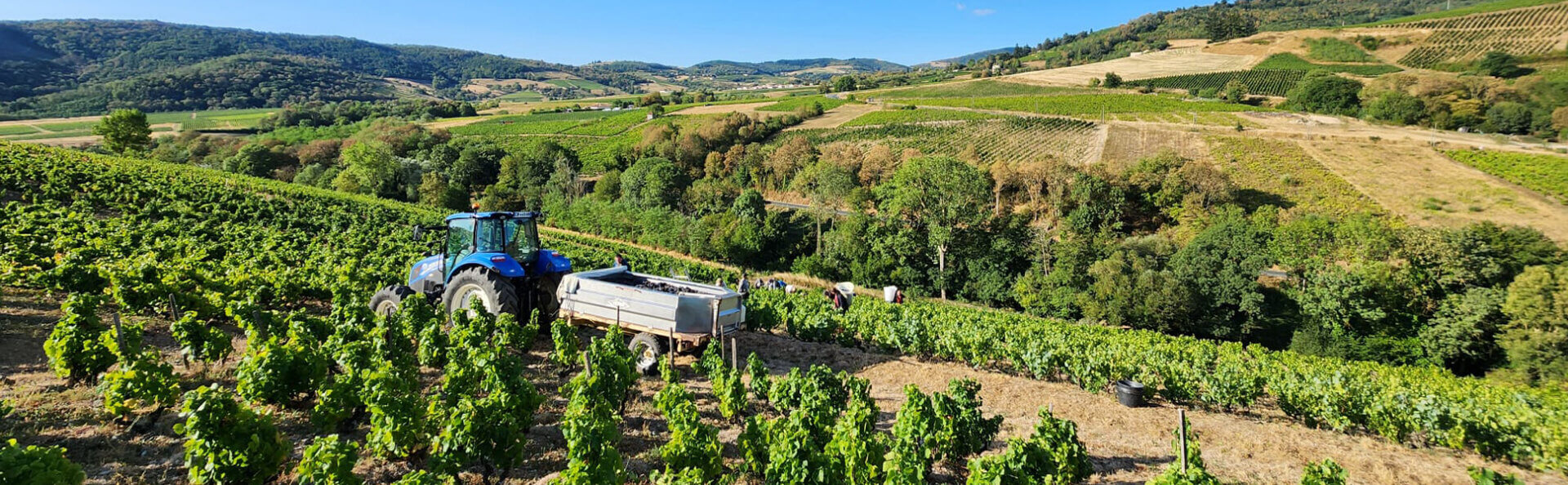
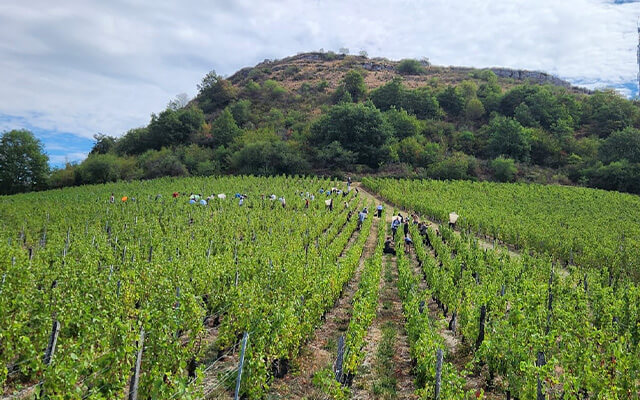
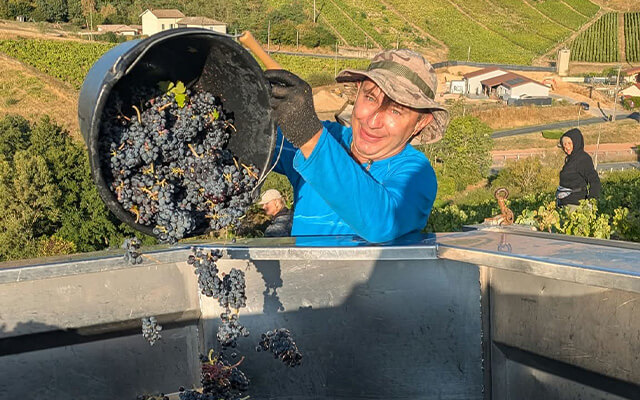
We began harvesting on August 17: our choice was not to wait any longer, because we didn’t want to see the ABV taking off too high. As anticipated, the harvested berries remained generally small, yielding little juice during pressing. Yields are therefore generally disappointing.
Our white grapes (Chardonnay) were in perfect condition, which allowed us to extract juices with beautiful aromatic clarity. As usual we particularly ensured the precision of pressing, in order to get enough quantity of fine lees, suitable for our fermentations in 228 or 350-litre casks, followed by our long ageing.
In keeping with the vintages of 2022 and 2023, the white wines are sunny in character, with full ripeness and a firm structure shaped by the drought. The aromas feature a profile of ripe yellow fruits, exotic notes, nuts, and honey. On the palate, there is a lovely sensation of power and volume, supported by a solid foundation of acidity and a delicate bitterness typical of dry vintages.
Our red grapes from Beaujolais (Gamay) — whose health and phenolic ripeness were also impeccable — were all sorted before maceration and fermentation in tanks, which took place over a relatively short period to promote the extraction of the finest tannins. The red wines are then aged in 228-liter barrels.
After two cooler vintages, Gamay has returned to a year typical of global warming, in which it truly flourishes. The wines are deeply colored, profound, powerful, and intense. The fruitiness so characteristic of Gamay is spectacular and jam-like, enveloping the ripe, silky tannins.
Stories, insight and of course wine
Stay up to date with the world of wine