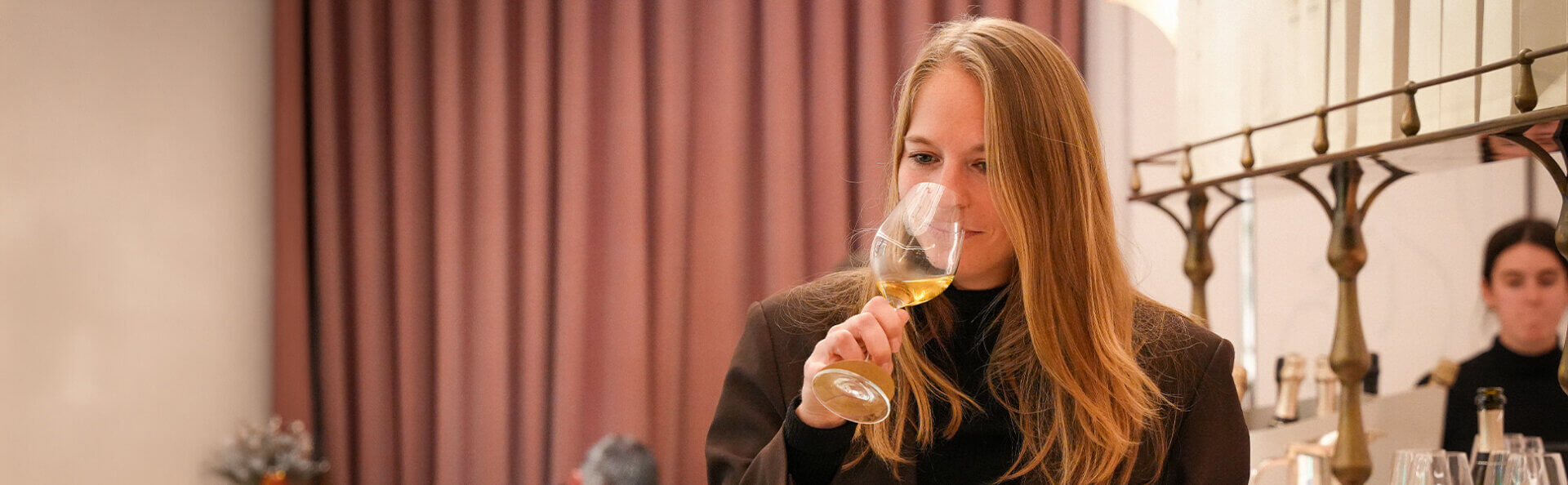
Popping a cork with Alice Tétienne, Champagne Henriot Cellar Master
Just a few weeks ago, Champagne Henriot pulled the curtain back on the return of the much-loved Cuvée des Enchanteleurs.
We wanted to dig properly into this historic Champagne House and the identity behind its creations – and who better to guide us through it than Cellar Master Alice Tétienne (though as we’ll learn, that title only paints a small part of her huge role with the company).
Alice was such good conversation when we sat down to talk, that we felt we simply had to share our chat in full – hopefully the first in a series of in-depth conversations with winemakers and winery owners.
From the considered history behind every Henriot Champagne, to her work in the vineyards and cellar, the evolution of Champagne viticulture in the face of climate change and the nature of remaining true to a historic brand whilst helping it to achieve an even higher potential, this is a wide-ranging, fascinating discussion with one of Champagne’s brightest stars.
Pour yourself a cup of tea – or, better still, a glass of fizz – and enjoy the read.
***
Fells: First thing’s first, please introduce yourself and your connection to Henriot
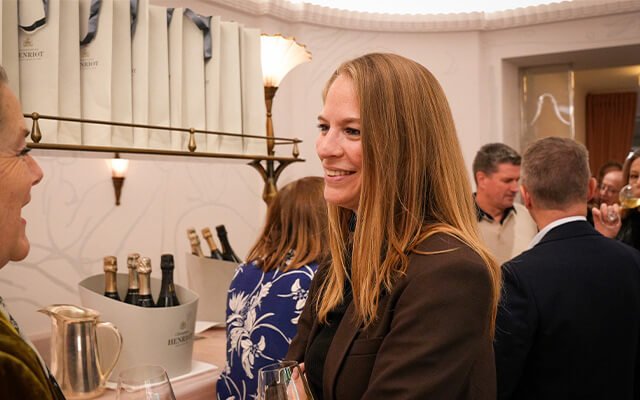
Alice: So I’m Alice Tétienne, I’m Cellar Master of the house of Henriot. I joined the company six years ago as Cellar Master and Vineyard Manager, and as I gained trust they gave me more missons! Marketing – because we wanted to have that connection between craftsmanship and image, so we decided to have only one direction between them. So that’s why I became Director of Communications and Marketing. And hospitality because the experience of the consumer is linked to the wine.
And I’m part of the strategy of the company. My role is to give a continuity. It’s very historical and important in the landscape of Champagne and we need to preserve that, to have patience and not want to change everything every day. Because in Champagne time is very important; we need time to produce bottles of wine, so we need to resist the tenets of consumers and our desire to create new things etc. But at the same time we need to exist, we need to be modern, we need to talk to new consumers. So that’s why we change the global strategy a little bi;, we produce different projects like the new labels, like the return of the Cuvée des Enchanteleurs, we had the return of Blanc Souverain, which was renamed ‘Blanc de Blancs’ in the 1980s. So we just always see the other guys, see who we are, take a new white paper and define where we want to be and how, with our tools that are our champagne, our craftsmanship, our philosophies that never move.
So this is my role. We are a small company at Henriot; just 35 people. It’s impassioning because it’s small in the landscape of Champagne, so it’s like a familial mindset. And with our strategy, we’re now more like a startup; everybody can say something. Everybody is part of the project, and we have a very dynamic team. I think we can be proud of the teams we have now. We have people who have been in the house for a very long time, who have an attachment but are willing to evolve with time. And we have young people too. It’s amazing.
Fells: You’ve mentioned how historical Henriot is – can you tell us a bit about that history?
Alice: The house of Henriot was born in 1808. When we say it was the foundation of the house with Apolline Henriot, in fact it’s linked to the first bottle we sold. Apolline Henriot had begun making wine before then. We don’t know exactly the moment she created the first bottle of Brut Souverain that we have in our collection today – her first creation – but we know she sold her first bottle in 1808.
Apolline was a grower who created wine. She was a grower, she was passionate about the Champagne region – she loved it – and she wanted to do something. She wanted to realise something and she wanted to show and share the beauty of the vineyards of Champagne to people. How do you do that? You make wine. So she was part of a group of women who decided to found Champagne houses and make wine. It’s a fantastic story.
And she had an interesting story because her Great Uncle was somebody very famous in the Champagne area – Chanoine Jean Godinot. He did a lot for the Cathedral and the city of Reims, the most important city in our region, and he had a vineyard. So she got his vineyards and she got his culture. He was and is famous in the Champagne industry because he wrote the first official manual about the craftsmanship and savoir faire of vines and wine in Champagne. It’s called ‘Manière de cultiver la vigne et de faire le vin en Champagne’ (‘How to Cultivate Vines and Make Wines in Champagne’). It’s like the first elements of the ‘cahier des charges’ of the AOC of Champagne. So that’s something very special.
And Apolline had the legacy of that – we think this is why she really wanted to have a traditional savoir faire – with blends, for example, because blends are mentioned in this manual. So she had the culture of traditional craftsmanship thanks to her Great Uncle, investment in the region thanks to her Great Uncle, and she was a grower – she loved to have her feet in the ground. She decided to make wine to represent the vineyards, so she made her first Champagne with a blend of vineyards – a blend of Crus. Which is how she began the work before 1808 of course.
And it’s amazing, because we still have the first Champagne she made in our collection today – the Brut Souverain. It’s the most important Champagne we have in our collection because it’s the biggest volume and the representation of the whole vineyard. She wanted to represent her own vineyard through different aspects of personality, thanks to the reserve wines. So different years are in the blend – in the past it was maybe one year, maximum two years, because it would have been in barrel, there would have been less control etc – today we have many decades in a blend. The oldest wines in current Brut Souverain are from 1969 because in 1969 we began to make a reserve of blends. So now it’s like a perpetual reserve of Brut Souverain.
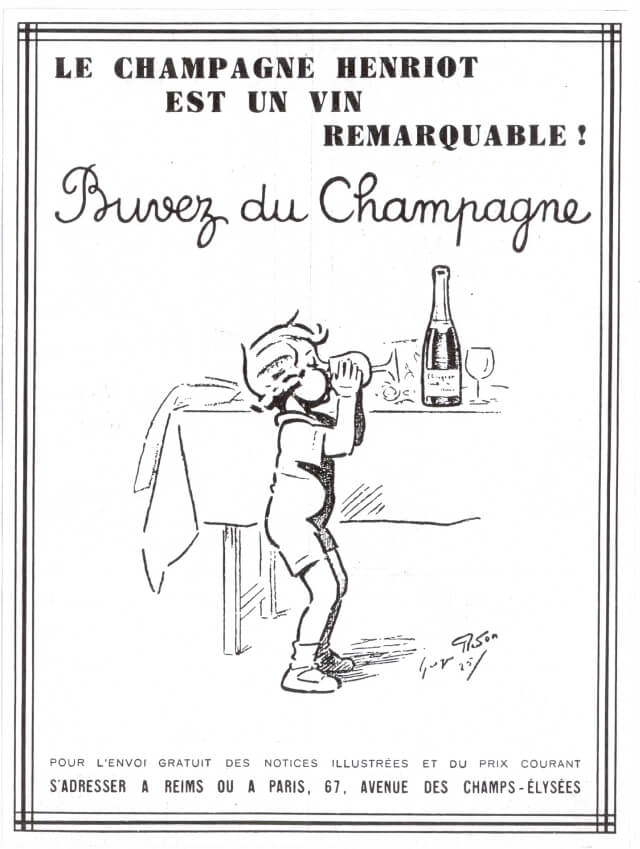
Apolline defined this craftsmanship and this philosophy and we’ve respected that since the beginning. Now we create our Champagnes with the same philosophy of representing the vineyard. So we have terroir cuvees – we didn’t say ‘terroir’ at the time, but ‘ground’! – and I think we have a coherent collection. Every Champagne we have is part of a story; they’re wines with a certain emotional profile – the goal at Henriot is to have emotional, great wines. Great wine is something good – great wine with emotion is better. So this is what we focus on. The stories are very important; we don’t want to change the philosophies of the cuvées, we want to respect them.
So we have Brut Souverain from 1808. We have Blanc Souverain from 1880, because 1880 was the year when the Côte des Blancs joined the vineyard of Henriot. We were only in the Montagne de Reims in the beginning with Apolline – it was only in Verzy, Verzenay and Mailly-Champagne, so we were ‘born’ with the grape variety of Pinot Noir. And in 1880 the fourth generation of the Henriot family married a grower in the Côte des Blancs. So we got a new Chardonnay vineyards in Avize, Mesnil-sur-Ogier and Chouilly. So when there is a transition in vineyards in our life we celebrate by creating a new Champagne – this is the story of Henriot! Blanc Souverain is the same philosophy as Brut Souverain, but only composed of Chardonnay. It’s all the Crus we have in the vineyards that are planted with Chardonnay.
In 1889 we created the Cuvée des Enchanteleurs, because in 1889 we got another transition of vineyards. We went in search of new Crus. It’s the beginning of when we became négoce; we began to work with growers to find grapes in other Crus that we couldn’t have by ourselves, like Trépail, Cramant, Oger – fantastic Crus in Montagne de Reims and Côte des Blancs again – this is our story. And we decided to pay tribute to this evolution by creating a new Champagne – but not with the new Crus but with the historical Crus, so another fantastic story.
Then we created other Champagnes like the Rosé, to complete the palette. The thing about the Champagne area is that it is one appellation but with a crazy diversity of terroir. Champagne is about 178,000 plots of vines – you can imagine the quantity of wines we could have, it’s amazing. So that’s why we have this collection of Champagnes – because we’re able to create that diversity of profiles. And we love pairing. In Champagne we drink Champagne all the time; at lunch and dinner we could drink only Champagne! Of course we love to drink other wines, but it’s important for Champenois to have a collection that’s able to be paired with different things. That’s why Rosé began in the 1970s, and why Henriot decided to do it – even though it was less about terroir and more an opportunity to have diversity. It’s important; emotionally it’s important.
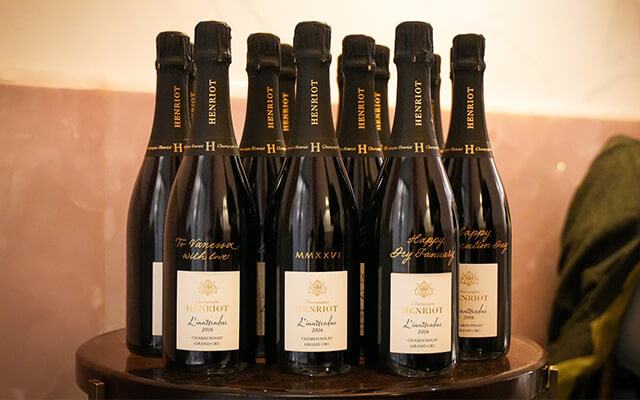
And today we have a terroir cuvée with L‘Inattendue. It’s very recent; the first vintage was 2016, but it was so coherent! We talk about vineyards all the time – we are from vineyards, we do the winemaking process separately for each one, for all the terroirs. So to have a mono-terroir cuvée was very coherent. It’s not just a mode, it’s another part of the philosophy of Henriot that is emotion. When you like a wine on its own, why don’t you bottle it individually to see the result and take emotion? So that’s why we have ‘the unexpected’ – L’Inattendue – today.
Fells: You’ve talked a lot about vineyards – tell us a bit more about those you work with, and the ways you practice viticulture?
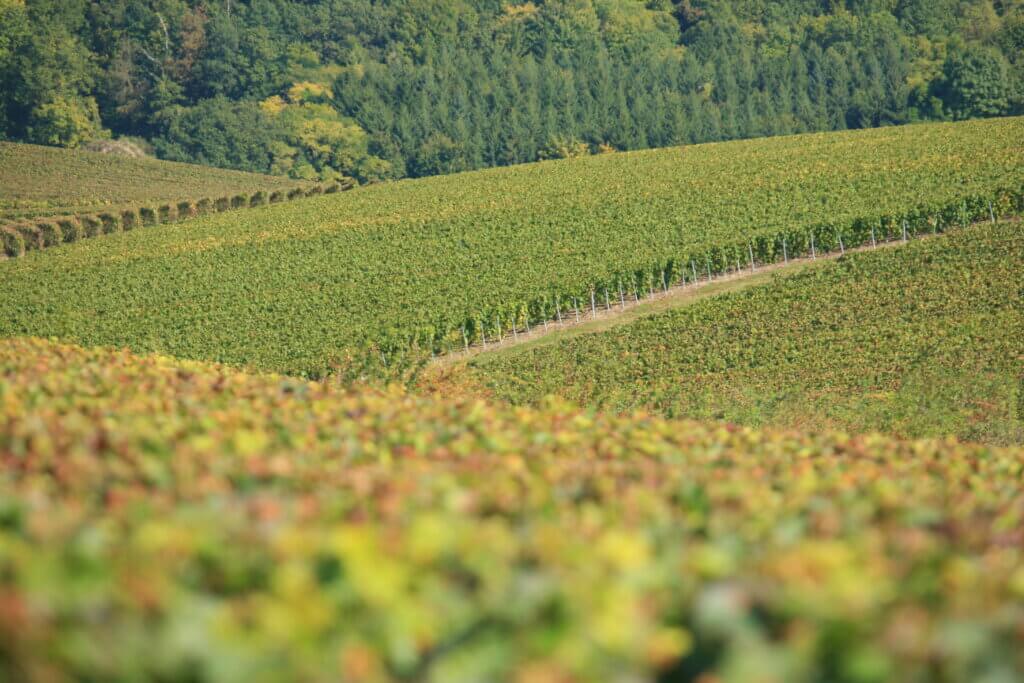
Alice: At Henriot we have about 37 hectares of vineyards that are our own. We are Certified Organic Viticulture – we come to the vine with a terroir approach. We are HVE and we are VDC, which is sustainable viticulture in Champagne – it’s more exigent than HVE. For us, Certification is not the end. It’s just a global philosophy that conduces us to, step-by-step, reduce our impact on the environment and increase the level of quality. Of course we had quality in the past, but climate change is a reality so we need to adapt ourselves to fight climate change and preserve the quality. So we have to work. So that’s why we’re very present in the vineyard – it’s a big part of our job. The biggest part of our human resources are in the vineyard, because we need people to do a good job.
When I joined the house we had this terroir approach, we had this desire to be sustainable – but we wanted to do more. We wanted to think differently, more out-of-the-box, because now we have more tools at our disposal; we have greater scientific knowledge. So we are able to adopt all these practices.
We created a project that is really our way to approach the vine – Alliance Terroir. It’s composed of three pillars, which are what we always think of in our viticulture. The first one is the knowledge of viticulture and terroir. We need to know to be able to take action. This is the principle. So we do a lot of analysis for each terroir; it’s not the same analysis for each one, because so many things are different from one plot of vines to another. We do necessary analysis; everything we do is something we can use and adopt, it’s not something we just do to take pleasure! It’s not just for the sake of science and research – we don’t have a research and development service – we just analyse to adopt the best practices possible.
So we do analysis on the soils. We need to know, for example, exactly the quantity of organic matter you need. To know exactly the texture and structure of the soil; so how do you work the soil? What is your level of humidity – with climate change, with more warm, dry weather it’s beginning to be difficult; even though we have chalk in Champagne, if we have less and less water one day the chalk will not have humidity. So we need to adapt our practices; do we keep the grass, do we work the soil, do we protect the humidity or not?
And we do analysis on the plants, on the vines, to see the photosynthesis potential, to see the vigour – from one year to another it’s not the same. To see the pressure of diseases, like mildew, allium etc. And we use AI a lot. It’s not just as a mode – AI helps us to be more precise. Because with only your eyes and analysis by hand, you’re not as precise. With AI you can view the vine differently, adapt exactly the good quantity at every centimetre. But AI is only the transcriptor of our data – after analysis it’s not AI that decides what we need to do – it’s us, humans, who decide. Because you cannot just have the analysis. You need to consider the feeling you have for your plant, with your experience.
The second pillar is the adaptation of viticultural practices to each terroir. It’s precise viticulture, because we know we are able to adapt – so it’s what I said, when we view each one we’re considering do we do a treatment or not etc.
And the third pillar is about the permanence of the vineyard – because we want to transmit it to the future, to the next generations, and we need to protect it. So every action is a big thing; with every positive action we can adapt. So we always do something new and consider what the next step is. So, for example, we are Organic – this is part of the action, to preserve the environment, because we consider organic practices very good to preserve the biodiversity. No herbicides etc. But in terms of carbon impact it’s less good – so what is the next step? The next step is to use horses to turn the soil for example; to adopt electric materials, tractors etc. So it’s always like this: we think ‘what is the positive action we can adopt?’
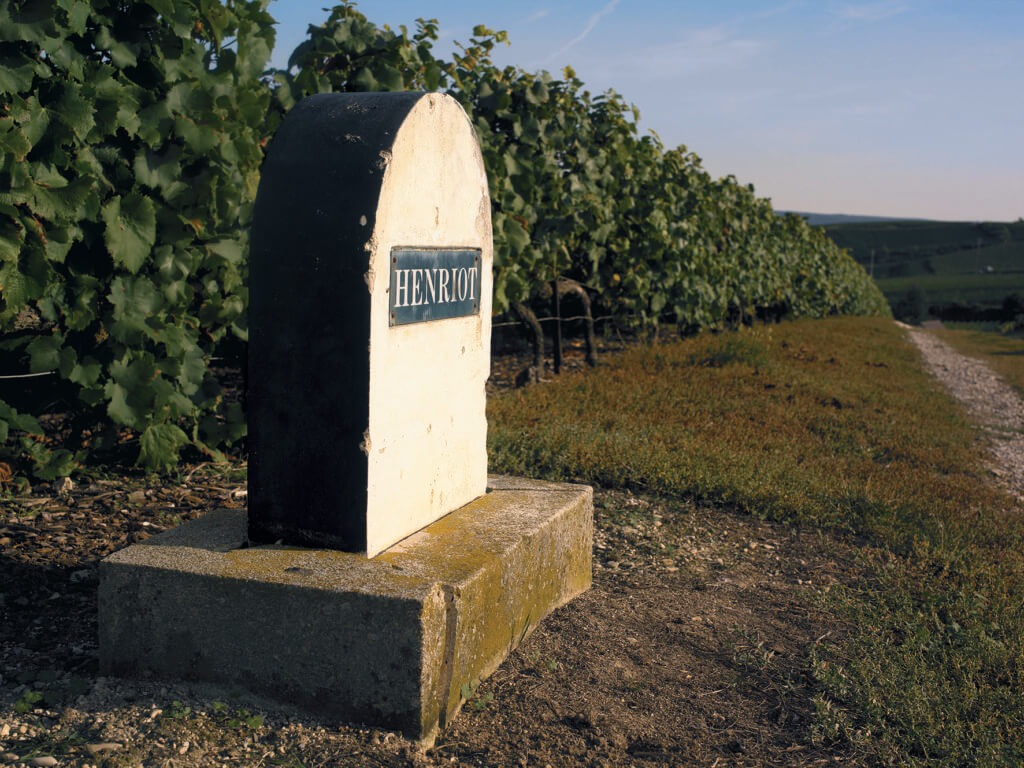
Fells: With a wine like Champagne, where ‘house style’ is such a key aspect, how do you marry that with your wines being an expression of their vineyards? And I suppose, as the ‘custodian’ of such a historic brand and range of wines, how do you maintain their personality whilst adding your own touch?
Alice: I think the philosophy is still the same – I think it’s important to respect that. And I’m personally very attached to that. I’m here, and if I’m here I protect the house – and I think this is the role of cellar master. We need, as I said, to resist outside inputs and our personal desires. But the way to give birth to the cuvées and the way to continue a philosophy is our own. Because it’s new to us, it’s new weather, it’s new elements, it’s new people when you do a recruitment – and when you recruit it’ll be with your own feeling of what you need to perpetuate the philosophy. So this is the touch we add – not directly maybe, but it makes a difference. The strategy feels more like a starter company’s – having more people included in the decision. This is something that brings something new, in a sense, too.
So I think my touch will be more in the way to give birth to the cuvées – the way to think viticulturally, for example; the creation of Henriot’s terroir, the way to pick the grapes. Because the maturity of the grape is such an important moment in defining your quality. Your quality is defined when you pick the grapes. You can be the best winemaker in the world, but if you don’t have beautiful grapes it will not be amazing – or you’ll have something that’s good but without emotion. So I think we’re just a tool, and nature is here, we need to compose with it, we need to respect it, we need to listen to it to make good decision. And then we open our eyes and we try to do something that is the best.
The days of maturity around the harvest, we taste the grapes every day. And this is my feeling: I don’t know how people did it 30 years ago when they picked the grapes – did they taste the grapes? I’m not sure. But not like today. Today we have a process; we taste, and when we taste we try to find this and that – at Henriot we are obsessed by the acidity, the freshness and the expression. If we don’t have the expression, even if we have a very high level of sugar and acidity, we don’t pick the grapes. We need aromas. We need to smell something – and have emotion. So maybe that’s another touch.
And then for the winemaking process, it’s not a big change because it’s been the same process for a very long time. At Henriot we have very neutral winemaking, and the difference between one wine to another is the origin, the terroir. So we don’t have a technical winemaking process – it’s very simple. But my touch, maybe, is the decision to reduce the volume of the tanks. Because now we separate the terroirs more, which I think is necessary. In the past you’d have homogeneity in a sector with different plots. Now it’s completely disconnected. You pick the grapes here, then the day after you pick the grapes there, then you come back here for another plot. So it’s quite different management than in the past. And because we’ve separated the plots, and because the profile for each plot is different and the date of harvest is different, we need smaller volume tanks to do the winemaking process. So this is one of the changes since 2020.
Also we’ve seen the yields decrease a lot over time because of challenges with the weather, so we need to reduce the volume again. It’s funny because it’s a little different when you compare the Brut Souverain before 2020 and when you taste ’20 and ’21 you taste something different?
Fells: I guess because you’re capturing the specific flavours of each plot separately so you have more flavours to draw on?
Alice: I think it’s the consequences of going step by step, small detail after small detail – it makes the wines a little bit different. But that’s not my goal; it’s not a goal to change the profile. And I think the philosophy is there; when you taste Brut Souverain before I joined and after I joined you recognise it. So that’s mission accomplished. But there are nuances.
Fells: It sounds like your role is about bringing the best out of what’s already there. This is probably like choosing a favourite child, but do you have a favourite? Or maybe a better question is what are some of your favourite moments or foods to enjoy particular cuvées with?
Alice: It’s not an easy question because I love every Champagne! It depends on the moment – I hate to always drink the same thing. I like to change, I like to taste at different moments, in different contexts and to feel different aromas. I love Brut Souverain. I have a special feeling for this Champagne because it’s very historical. I’m from the Champagne area – I love stories, and I think some of the elements of this cuvée explain what Champagne is very well, and I think we need to protect that. But I love Inattendue, for example, which is very young in our collection – but I love it because it has emotions. And I can have emotions for either of them depending on my mood.
In terms of creation Brut Souverain is the most impassioning, as well as Cuvée des Enchanteleurs, for different reasons. Brut Souverain and Blanc Souverain are the most difficult to realise, because it’s many wines from many years and we need to find the best balance. But with the process we have it’s not so difficult because we have many different wines at our disposal and we select all the wines we have that are different and we see the result. But you need to do fine tuning to have something amazing – and it’s long, it’s a hard job.
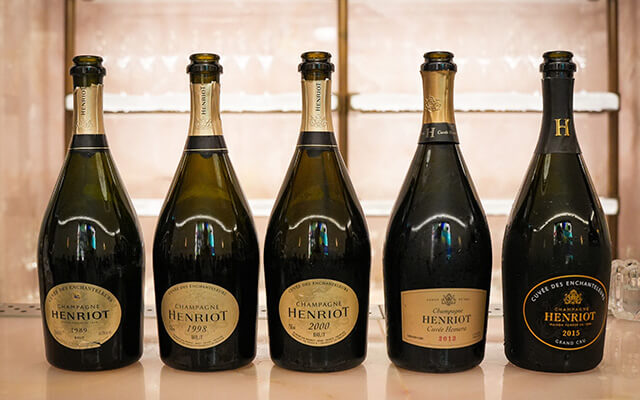
But Cuvée des Enchanteleurs is easy to do because you just take the six founding Crus of the house and you put it together with exactly the same volume of each – so it’s a recipe; you just have to follow the recipe. We need to select which plots from the Crus etc, but it’s simpler. But what is magic is that you don’t know, even if the wines are individually amazing, if together it will match. And we’re like children – we do the blend and when we taste and discover them we’re super excited and we want to know what the verdict is, the conclusion, whether we’ll bottle it or not. It’s simple – good or no good. But we’re like ‘ah, please!’ And when we’ve got it we’re like ‘yes – it’s great, let’s do it!’ And if that’s not the case it’s not sad – it’s life, it’s nature.
So that’s why I love them – because it’s a different exercise. But I love every blend. It’s the best period of the year, it’s a gift – it’s a moment where we think: ‘oh, we have a very, very precious job’. Because it’s fascinating, it’s a pleasure.
Fells: It’s a good job to have! Lastly, what’s the immediate future for you and for Henriot?
Alice: I really have my fingers crossed that we find a solution to fight climate change. Because every year we have new symptoms of it. It’s more extreme weather, new discoveries every year. And we begin to feel things that we didn’t expect, like a dry profile of the grapes in 2025. 2024 was a disaster – we had very small yields because we had no sun and too much rain. The same weather in London, I imagine – horrible, horrible! And 2025 it was warm and dry, and I think it’s becoming normal – as humans we’re ok with the temperature even when it’s very high. It was the highest temperature we’ve ever had in Champagne. But the vines were ok; for the first time we had no grapes burned, but when we picked the grapes they were very small and quite dry, so there was a real lack of juice. So the final yield was small. So I have my fingers crossed that tomorrow we’ll be able to make wine – to have juice.
If that’s the case, if we have positive schema, I think we will continue the plot by plot approach and reduce the volume of the tanks again. So more diversity of wines at our disposal again, make more Inattendue. We’ve begun to do it, because every year we have more terroirs that we want to see grow individually in the bottle.
And we’ve talked about vineyards and needing to manage them properly, and this being the biggest challenge for the future. But there’s another part that we’ve considered at Henriot and which I think we will push in the future, which is packaging. The global impact we have on the environment, it’s not just about the vineyard. And sometimes both consumers and winemakers forget that. The vineyard is just a small part of our impact on the environment. We have many actions today to reduce our packaging impacts, but it’s step by step. In the future I hope we will not need any packaging. If it was just me there’d be no gift boxes at Henriot, to be honest – but it’s not just me, there is the consumer. And the consumer, when they go in the cellar, maybe wants gift boxes. And I understand that, but I think maybe in the future we will need to do more sharing of information on what the impact is – and help the consumer be responsible. Because today the companies are responsible, but if we don’t share the information with people, how can they share the responsibility?
So that’s what I’d like to do – without any judgement, I mean. I really want us to work on it at Henriot in the future. We’ve begun the work, because we’ve stopped specific cases for each expression, now we only have one. And then we decided to change the type of case, so now there’s no colour, no treatment of the surface, so it’s a very simple case, which I think is a good beginning. We’ve changed many things: the wood we use for boxes, we’ve changed labels, stopped part of the material we used, we reduced the colour so it’s natural colour to reduce pollution, we stopped using the gold – everything that consumers like, we need to stop!
Now, when we have requests for shipments of bottles with gift boxes we try to ask: ‘is it necessary?’ And hopefully the perception of gift boxes decreases a lot – because of talking about it, and because people might not need them. Restaurants understand that they don’t need gift boxes – in the past that was not the case.
So I think the future of Henriot is give priority to the vineyard, continue to take a terroir approach, fight with the nature to exist again, make more terroir cuvées but also continue to make blends because this is our essence, and reduce our impact on the environment globally.
Stories, insight and of course wine
Stay up to date with the world of wine