Guy Woodward investigates Italy
We’re spoiling you today with a brilliant, deep-dive article on some of Italy’s finest wines written by none other than former Decanter editor Guy Woodward.
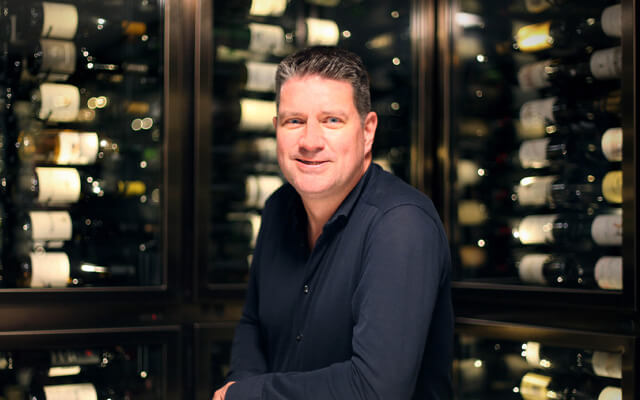
Guy’s a hugely experienced and knowledgeable wine authority. Besides editing Decanter for a decade, he’s written extensively on the subject for well over twenty years. His bylines are far too numerous to list here, but trust us – you’ve heard of them all.
For this piece he’s investigated the surprisingly modern rise of ultra site-specific Italian wine. Speaking to our friends at Ratti, Ricasoli, Tedeschi and Altesino Guy’s got to grips with regions exploring their greatest terroirs for the first time.
It’s a brilliant read, as you’d expect, so we’ll stop talking at this point and hand you over to the professional.
Take it away, Guy.
Why site-specific wines are on the rise in Italy
Although there is evidence of the name Cannubi appearing on a bottle of Barolo back in 1752, it was another two centuries or so before the concept of Italian crus or single-vineyard wines began to take hold. For while official classifications ranking the top Burgundy and Bordeaux sites became well established in the 19th century, their Italian counterparts emerged in much more ad hoc fashion.
Before the impact of climate change began to be felt, and in an era of more primitive viticulture and winemaking, great Italian vintages could be once-in-a-decade occurrences. Partly as a consequence, the country’s finest microclimates and soils came to prominence in an organic, natural way. In the 1960s, as sharecropping was abolished and the focus began to shift from quantity to quality, innovators such as Tedeschi’s Capitel Monte Olmi Amarone della Valpolicella DOCG Classico Riserva (1964) showed the individuality and quality of these sites – but they were a rare breed.

Barolo trailblazer Renato Ratti followed a more deliberate path. Ratti visited Burgundy in the 1960s and saw at first hand the importance of single vineyards. He returned to Piedmont, says his son Pietro, with the feeling that, ‘If you can express that difference, it is beautiful to do it’. In 1965, he made his first cru wine, from a single vineyard in La Morra – Marcenasco. ‘Back then, the big producers dominated the market,’ says Pietro. ‘If you were a small, less well-known producer, making a single-vineyard wine was a way to showcase that independence and gain profile.’
When Ratti vinified the fruit from his Marcenasco vineyard in 1965, he set in motion a philosophy that, almost half a century later, would result in the official delineation of Barolo’s numerous vineyard sites. There was, back then, no structure in which to place such wines, and as others started to follow his lead, Ratti was adamant that the region needed, in his son’s words, ‘to show the world that these wines were not just Italian fantasy names.’ Ratti decided that what was needed was a map.
Walk into any Barolo winery today and there’s a good chance that his Carta del Barolo will be on the wall. Published in 1971, it was the first time the region’s historic (yet unofficial) subzones had been mapped out. And though it wasn’t intended as such, it turned out to be a precursor to the official ratification of 170 MGAs (‘Menzione Geografica Aggiuntiva’) in 2010, finally permitting subzones to appear on the label.
The Barolo model is replicated in the multiple zoning projects seen across the country today, from Barbaresco to Etna, Chianti Classico to Soave Classico. Each is intended to communicate an expression of style over quality, linking what’s in the bottle to a specific piece of earth and sky. It’s a concept known, since Roman times, as ‘genius loci’, or ‘spirit of the place’, and differs from the more rigid French concept of terroir by incorporating not only a vineyard’s physical environment but its broader cultural identity, history and heritage. And it is an approach that is now fast gaining pace across the country….
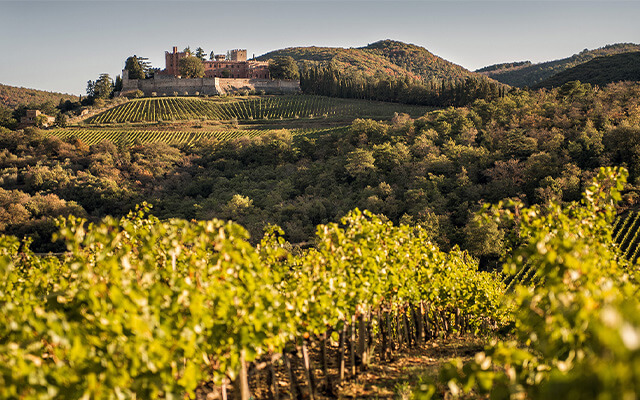
Take Chianti Classico, where Ricasoli, Italy’s oldest winery, was founded in 1141. Its flagship wine, the Castello di Brolio Chianti Classico Gran Selezione, takes a similar approach to that employed for Ratti’s Marcenasco bottling today. By combining the best Sangiovese from four high-altitude parcels in the commune of Gaiole, it’s a cru-wine rather than a single-vineyard wine – and it made waves as something of an outlier when first released back in 1997.
The Gran Selezione category was eventually introduced in 2014, to sit above Chianti Classico Riserva. While such wines have to be 100% estate-grown, they are not necessarily from a single vineyard – although from 2022, one of 11 newly established UGAs (‘Unità Geografiche Aggiuntive’) can be referenced on the label, with the expectation that these will trickle down to Riserva and even annata Chianti Classico in the future. In Ricasoli’s case, this means Gaiole, and for those looking for a more granular focus, Ricasoli has a trio of single-vineyard Gran Selezione Gaiole bottlings – Colledilà, launched in 2007, followed by Roncicone and Ceniprimo, all from a slightly lower attitude.
The wines were the result a project Ricasoli conducted in the 2000s, in collaboration with the National Centre of Research in Viticulture and Geology, to document the different soils across its 250ha of vineyards. Such an exercise will be familiar to the Tedeschi family in Valpolicella, where it has been making its Capitel Monte Olmi Amarone since 1964. The 2.5-hectare terraced vineyard of Monte Olmi, acquired by the family in 1918, has a southwest exposition with morainic soils and limestone marls, ensuring notable freshness, balance, complexity and ageability. The grapes are dried for 120 days and the wine is released – only in the best years – after extended ageing in Slavonian oak barrels and a year in bottle.
Today, Tedeschi make another four single-site wines – two Amarones and two Valpolicellas – all the result of soil characterisation studies begun in 2010 which has seen them apply specific viticultural methodology to best suit each plot, or even each row. The Amarones comprise La Fabriseria, from a site planted in 2000 and first released in 2011, and Maternigo, from a vineyard planted in 2005, whose first vintage was 2016. ‘Five different Amarones is quite a lot for a medium-sized producer,’ says Tedeschi, ‘and sometimes people ask why we do it. But we own vineyards in different valleys, and we like to show the different terroirs.’
Since crus in Valpolicella are not part of the appellation, they act more as brand names, generally belonging only to individual producers. It’s a similar situation in Montalcino, where Montosoli is one of Tuscany’s most recognisable terroirs; a round hill located in the cooler north-east sector, where a complex patchwork of mineral-rich, marly, calcareous soils rise to around 400 metres above sea level. The hill benefits from the shelter provided by the hilltop town of Montalcino, reducing the risk of spring frost, while the constant daytime sunlight is balanced by the hill’s altitude to ensure cool night-time temperatures. The result is a happy marriage of ripeness and Sangiovese’s signature acidity to yield a landmark wine that, aged for approximately 48 months in Slavonian oak, is energetic, harmonious and layered.

Altesino was the first producer to bottle a single-vineyard Montosoli – the 1972 vintage (not 1975, as previously believed) – and together with other wineries such as Baricci, Caparzo, Le Ragnaie and Valdicava, has cemented Montosoli’s reputation as an unofficial Brunello ‘grand cru’. Federico Moccia, head sommelier at 67 Pall Mall in London and a passionate champion of Italian wine, agrees with the moniker: ‘Montosoli is, for me, the best site in Montalcino,’ he says – though he is quick to add that the lack of official classification makes such an accolade entirely subjective. ‘Defining a grand cru in Montalcino is impossible unless you go out with a rifle and tell everybody, “This is grand cru.”’
As with Valpolicella, in Montalcino, there are no official sub-regions or yet. Instead, it is up to the winery to define any single-vineyard wines. Altesino’s CEO Alessandra Algelini feels anything more prescribed would be challenging. ‘Montalcino is very complicated. One vineyard is so different from the other, even from one side of the road to the other. Montosoli is pure rocky, galestro soil, while some of our other vineyards are rich, red clay.’ On the other hand, she points out that Montalcino’s 100% Sangiovese approach (like the monovarietal Burgundy and Barolo) does naturally encourage a terroir-focused eye.
Moccia, though, cautions that systems take time to become known, and instead prefers to focus on the merits of individual wines. ‘I like the concept of single-vineyard wines – wines that showcases the character of a place, and that change every year. In Chianti Clasico, where there was a need for a more prestigious category of wine, it made sense. But people don’t really know all the different Italian crus or styles yet. Not like in Burgundy, where the crus have been around for 300 years. They’re becoming better known, but at the moment I feel people choose wines because of the producer rather than the cru.’
James Button, Italian editor at Decanter, argues the potential rewards are worth the effort, however. ‘It’s only in more recent years that, as quality has homogenised and consumer knowledge has reached an all-time high, the conversation surrounding single-vineyard wines has moved from comparative quality to unique site expression,’ he says. ‘Single-vineyard and cru wines represent a gateway into understanding the genius loci of a place. They’re more than just a wine – they encapsulate a unique story that’s waiting to be told.’
By Guy Woodward
Stories, insight and of course wine
Stay up to date with the world of wine