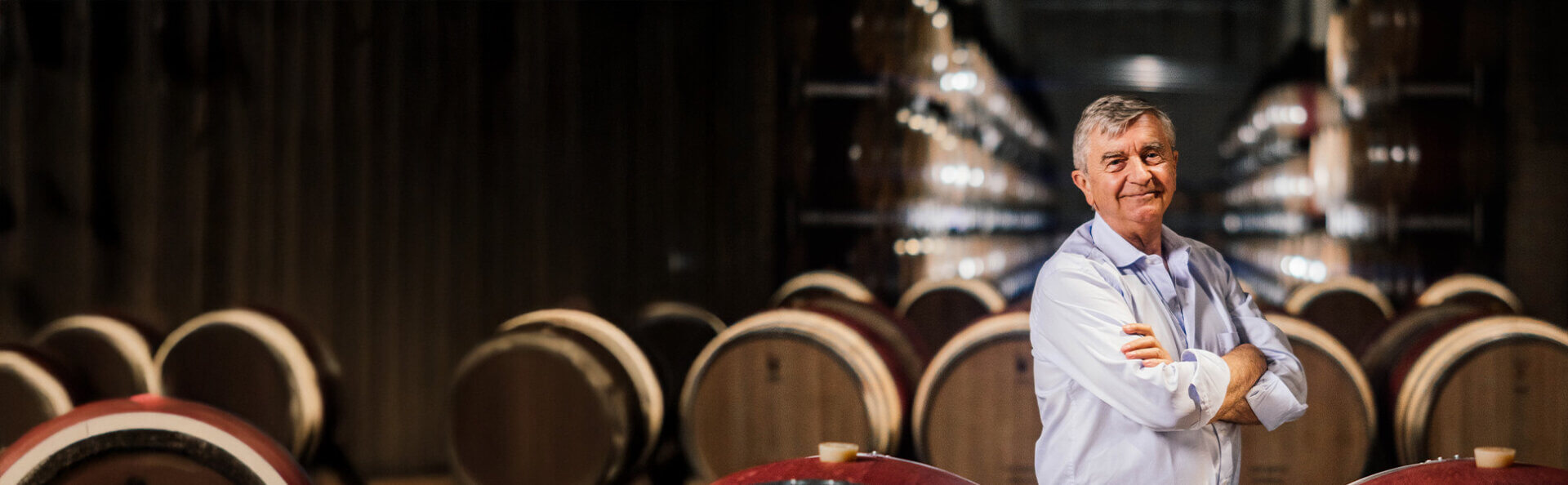
Francesco Ricasoli, owner, Ricasoli
‘Back in the ‘90s, it was all about the SuperTuscans. Chianti Classico was still very much a commodity back then, and had to be priced as such. I released Castello di Broglio in 1997, in a provocative way, as our most expensive wine – and it was not even a Riserva. This was way before the Gran Selezione category existed, but I was trying to show that this wine was deserving of a higher classification, to show the Consorzio that we needed a new box for the great Chianti Classicos.
‘I will never forget at VinItaly, when a buyer from one of the big UK supermarkets came to our stand and said, “I hear your top wine is just Chianti Classico, not a SuperTuscan, and costs X. You’ll never fetch such a price for a Chianti Classico.” Then she asked if she could taste it, and I said, “Since you don’t believe in it, and you’re not going to buy it, no, you can’t.” It was rather rude of me, but I made my point.
‘Whenever there is something new, people are sceptical. When the Grand Selezione category was launched in 2014, there were only 33 estates doing it. Today, there are 200. It represents 6-7% of Chianti Classico’s volume, but 11-12% of the turnover. It’s the recognition of the great work that the most serious producers of the region have been doing to raise quality. And worldwide, there’s no doubt that people are recognising that Chianti Classico has undergone a beautiful renaissance after living in the shadow, if I am honest, of Brunello. It is exactly what we needed.
‘Do people in the UK understand the category? No, not yet. It’s a relatively young classification, and it’s difficult to communicate. But we’re creating a trend here, a new movement that’s about much more than just individual vineyards.’
Stories, insight and of course wine
Stay up to date with the world of wine